

Ads
Unraveling the Mysteries of the Past: A Fascinating Journey through History
The fascination with the past has always instigated human curiosity. It is through history that we understand our origins, evolutions and the milestones that have shaped the world we live in today. From ancient civilizations to the most recent events, each fragment of the past holds secrets and precious lessons. In this article, we will make a deep immersion in the mysteries that permeate history, revealing curiosities, theories and archaeological discoveries that challenge our understanding.
Ads
Exploring different historical periods, we will approach the enigmas of the pyramids of Egypt to the mysteries of lost civilizations, such as the city of Atlantis. In addition, revolutions and figures that played decisive roles in the transformation of the world are highlighted. The intrigues and conspiracies surrounding certain historical events also gain space, showing how history can be full of twists and surprises.
Archaeology, as a science that studies human cultures through material remains, is one of the pillars of this journey. Escavations and recent discoveries have shed new light on ancient puzzles, providing a renewed look at what we thought we knew. Technological advances, such as carbon dating and satellite images, have allowed us to unravel mysteries that once seemed unsolvable, expanding our knowledge and challenging paradigms.
Ads
The connection between past and present is inevitable, and understanding this relationship is essential to understanding our place in the world. Embarking on this fascinating journey through history is not only an exercise in learning, but also an opportunity to appreciate the cultural richness and lessons that the ancestors bequeathed to us. Prepare for an engaging and informative reading, which promises to instigate your curiosity and enrich your knowledge about the mysteries that time has hidden.
The Origins of Humanity#
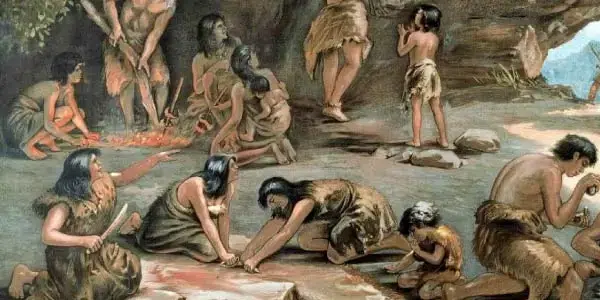
Human history is a vast ocean of discoveries, mysteries and advances that have shaped modern society. The origins of humanity date back millions of years ago, when the first hominids began to walk the Earth. It is fascinating to imagine how these early humans lived, hunted and protected themselves in a hostile and dangerous world.
Early hominin fossils, such as the famous Australopithecus afarensis, nicknamed “ Lucy”, offer us a glimpse of how our ancestors looked and behaved. Lucy, discovered in 1974 in Ethiopia, is one of the most complete and important fossils ever found.
Another significant milestone in the journey of humanity is Homo habilis, which lived approximately 2.4 to 1.4 million years ago. They are known to be the first to use stone tools, marking the beginning of the so-called Stone Age. These rudimentary tools, such as sharp flakes of stone, allowed Homo habilis to hunt, cut meat and manufacture other utensils, which represents a major technological advance for the time.
The transition from Homo habilis to Homo erectus brought with it the discovery of fire. This transformative innovation allowed cooking food, driving away predators and providing heat in cold climates. The discovery of fire is a watershed in human history, as it paved the way for a safer and more socially complex life.
The First Civilizations#
With the development of agriculture, approximately 10,000 years ago, humans began to form more stable communities. This period, known as the Neolithic Revolution, marked the transition from nomadic societies of hunter-gatherers to agricultural and sedentary societies. With agriculture came the need to organize labor, store surpluses and protect goods, leading to the emergence of the first civilizations.
Mesopotamian civilizations, located between the Tigris and Euphrates rivers, are considered some of the oldest in the world. Sumerians, Akkadians, Babylonians and Assyrians contributed significantly to culture, writing and legislation.
The Code of Hammurabi, one of the first codifications of laws in history, is another notable example of this era. Created around 1754 BC by the Babylonian king Hammurabi, this code established clear norms and penalties for various situations, reflecting a society that sought justice and order.
Meanwhile, in the Nile Valley, Egyptian civilization flourished, known for its monumental pyramids, advanced engineering techniques, and a complex hierarchical society.
The Indus Valley civilization, contemporary with Mesopotamian and Egyptian civilizations, is also noteworthy. Located in present-day India and Pakistan, this civilization is notable for its planned cities such as Harappa and Mohenjo-Daro, which possessed advanced sewage systems and impressive urban organization for the time.
Empires and Achievements#
As civilizations expanded, empires emerged that sought to dominate vast territories and different peoples. One of the most notable was the Roman Empire, which at its height controlled much of Europe, North Africa and the Middle East.
A period of relative peace and stability that lasted some 200 years, allowed the flourishing of the arts, sciences and architecture. Works such as the Colosseum, aqueducts and Roman roads are enduring witnesses to Roman ingenuity and its ability to integrate diverse peoples under a single administrative system.
Simultaneously, in the East, the Persian Empire under the leadership of Cyrus the Great established one of the largest empires in ancient history. Persia stood out for religious and cultural tolerance, allowing different peoples within its domain to maintain their traditions and customs.
China also had its glory periods, with dynasties such as Han and Tang expanding Chinese territory and deeply influencing Asian culture and politics.
On the American continent, before the arrival of the europeans, civilizations such as the mayas, aztecs and incas developed complex and advanced societies. The mayans, for example, were masters in astronomy and mathematics, while the incas built a vast empire interconnected by a network of roads and bridges that crossed the Andes.
Religion & Philosophy#
Religion and philosophy played crucial roles in shaping societies throughout history. Early religious beliefs were often linked to natural phenomena and the attempt to understand the world around them.
In ancient Egypt, for example, religion was intrinsically linked to political power, with pharaohs being seen as gods on Earth. The Egyptians believed in the afterlife, which influenced practices such as mummification and the construction of elaborate tombs.
In the Near East, Judaism emerged as one of the first monotheistic religions, centered on the worship of a single God. This religious tradition not only influenced other monotheistic religions such as Christianity and Islam, but also played a crucial role in shaping Jewish identity and culture.
In India, Hinduism and Buddhism emerged as philosophical and religious systems that explored deep questions about existence, suffering and enlightenment. Buddhism, founded by Siddhartha Gautama, spread throughout Asia, influencing cultures and societies with its teachings of compassion and detachment.
Philosophers such as Socrates, Plato, and Aristotle questioned the nature of reality, ethics, and knowledge. His ideas not only shaped Western philosophy, but also influenced science, politics, and art.
Christianity, born in the context of the Roman Empire, spread rapidly and became a dominant force in Europe. The Roman Catholic Church played a central role in the Middle Ages, not only as a religious institution, but also as a powerful political and cultural entity.
Art & Culture#
Art and culture are fundamental expressions of human experience, reflecting the values, beliefs and aspirations of societies throughout history. From prehistoric cave paintings to Renaissance masterpieces, art has been a powerful means of communication and a way to preserve collective memory.
The earliest art forms, such as paintings in the caves of Lascaux in France and Altamira in Spain, date back about 40,000 years ago. These paintings, depicting animals and hunting scenes, offer us a window into the life and beliefs of early humans.
In Mesopotamia and Ancient Egypt, art was often linked to religion and power. Mesopotamian ziggurats and Egyptian pyramids are examples of how monumental architecture was used to glorify gods and rulers.
In ancient Greece, art evolved into more naturalistic and humanistic forms. Greek sculptures, such as the Discobolus of Myron and the Parthenon, represent an ideal of beauty and perfection that continues to influence Western art to this day. Greek theater, with its tragedies and comedies, was also an important form of cultural and social expression.
The Renaissance, a period of cultural and artistic renaissance in Europe, brought an explosion of creativity and innovation. Artists such as Leonardo da Vinci, Michelangelo and Raphael created works that are considered treasures of humanity. This period also saw significant advances in science, literature and philosophy, with figures such as Galileo, Shakespeare and Machiavelli.
Chinese, Japanese and Indian art and culture have developed unique styles and traditions.
Science & Innovation#
Throughout history, the quest for knowledge and understanding of the world has led to scientific advances and technological innovations that have transformed society.
Ancient civilizations such as the Egyptians, Babylonians and Greeks made significant contributions to science. The Egyptians were known for their advances in medicine and engineering, while the Babylonians developed a precise calendar and techniques of astronomy.
During the Middle Ages, the Islamic world became a center of knowledge and innovation. Islamic scholars translated and preserved ancient works and made advances in areas such as algebra, chemistry and medicine. The House of Wisdom in Baghdad and the University of Al-Quaraouiyine in Fez are examples of institutions that promoted learning and research.
The Renaissance and the Scientific Revolution marked a period of intense intellectual activity and discovery. Copernicus, Galileo and Newton pioneered changing our understanding of the universe, while figures such as Leonardo da Vinci explored the intersection of art and science. The invention of the printing press by Johannes Gutenberg was also crucial for the dissemination of knowledge.
In the XIX and XX centuries, the Industrial Revolution and advances in science and technology transformed society in unimaginable ways. Electricity, steam engine, telegraph and automobile are just some of the innovations that redefined everyday life. Einstein's Theory of Relativity and the discovery of the structure of DNA by Watson and Crick are examples of how science has continued to expand the limits of human knowledge.
Today, we live in the digital age, where information technology and the internet have revolutionized the way we work, communicate and access knowledge. Artificial intelligence, biotechnology and space exploration are just some of the frontiers that continue to challenge and inspire humanity.

Conflicts and Transformations#
Human history is also marked by conflicts and transformations that have shaped the course of nations and cultures. Wars, revolutions and social movements have been powerful forces of change, often bringing both destruction and progress.
The World Wars of the XX century were cataclysmic events that profoundly altered the global scenario. The First World War, with its trenches and new military technologies, resulted in unprecedented devastation and led to the fall of ancient empires. The Second World War, even more destructive, brought to light horrors such as the Holocaust and culminated in the use of nuclear weapons. However, these wars also catalyzed technological advances and political changes, such as the
Continue reading
You might like it too
Discover the Secrets of History
Exploring the hidden secrets of the past is one of the most enriching and intriguing experiences we can have.

Exploring History: A Fascinating Journey
Unraveling the mysteries of the past is a fascinating journey that transports us through the centuries, revealing the richness and complexity of the.