

Ads
Mythologies around the world have always aroused the curiosity and fascination of people. Their stories filled with heroes, gods and fantastic creatures have shaped cultures and influenced civilizations over the centuries. In this post, embark on an engaging journey through the most emblematic legends that have marked the history of humanity, unraveling the mysteries that permeate these ancient accounts.
From the powerful Greek mythology with its gods and demigods to the intricate narratives of the Nordic peoples, each culture has a rich collection of stories that explain natural phenomena, teach moral lessons and reflect the worldview of its peoples.
Ads
Discover the founding myths that explain the creation of the world and the origin of humanity, the epic adventures of brave heroes, and the titanic battles between gods and monsters. Each story brings with it a piece of the soul of a civilization, offering a window to better understand our own origins and values.
Prepare for a fascinating immersion into this universe of legends and traditions. We will reveal the secrets behind the narratives that not only entertained, but also taught and guided generations through the ages
Ads
Ancient Mythologies: Cradle of Civilizations#
Mythologies are narratives that intertwine with the essence of cultures, reflecting their beliefs, values and traditions. Mythological stories were passed down from generation to generation, often through orality, and played a crucial role in the formation of ancient civilizations. Through them, we can better understand how our ancestors viewed the world and interpreted natural and existential phenomena.
Among the best known are Greek, Roman, Egyptian and Nordic mythologies. Each of them carries with it a rich tapestry of gods, heroes and fantastic creatures, each with its own characteristics and engaging stories. These narratives not only entertained, but also offered explanations for the mysteries of the universe, being fundamental to the social cohesion and cultural identity of their respective societies.
Greek Mythology: Gods and Heroes#
Greek mythology is perhaps one of the most detailed and complex in the ancient world. Filled with gods with diverse personalities, valiant heroes and mythical creatures, Greek stories fascinated and inspired countless generations.
Zeus, the god of the heavens and thunder, was the leader of the gods of Olympus. Married to Hera, the goddess of marriage, Zeus had many children, both with her and with other goddesses and mortals. His children included gods known as Athena, goddess of wisdom; Apollo, god of the sun and music; and Artemis, goddess of the hunt.
Roman Mythology: Adaptation and Syncretism#
Roman mythology is often seen as an adaptation of Greek mythology, with many roman gods having Greek equivalents.
Jupiter, for example, is the Roman equivalent of Zeus and was the king of the gods, ruling the sky and thunder. Juno, his wife, was the goddess of marriage and protector of women. Other important gods included Mars, god of war, and Venus, goddess of love and beauty. Roman mythology often extolled the military virtues and importance of civic duty, reflecting the highly disciplined society focused on territorial expansion.
Egyptian Mythology: The Nile Enigma#
Egyptian mythology is deeply rooted in the geography and culture of ancient Egypt, particularly the Nile river, which was the source of life for this civilization.
Ra, the sun god, was one of the most important gods and was often depicted with the head of a hawk and a sun disk. Osiris, the god of the afterlife, and his wife Isis, the goddess of magic and motherhood, were central in the myths about death and resurrection. The myth of Osiris is especially significant, as it tells the story of his death at the hands of his brother Set and his resurrection by Isis, symbolizing the cycle of death and rebirth.
Norse mythology: Ragnarok and Valhalla#
Norse mythology, originating in the Scandinavian regions, is known for its epic narratives and its warrior gods.
Odin, the supreme god, was known for his wisdom and his sacrifice in search of knowledge. He was accompanied by his two ravens, Hugin and Munin, who represented thought and memory. Thor, son of Odin, was the god of thunder and battle, famous for his hammer Mjolnir, which protected the gods and humans against giants and other threats.
Mythologies of Asia: Diversity and Cultural Wealth#
Asia is a vast and diverse continent, and its mythologies reflect this cultural richness. Among the most influential are Hindu, Buddhist, Chinese and Japanese mythologies, each with its own stories, gods and teachings.
In Hindu mythology, the Vedas and Puranas are sacred texts that narrate the history of the gods and the universe. Gods such as Brahma, Vishnu and Shiva play central roles in the creation, preservation and destruction of the world. Krishna, one of the incarnations of Vishnu, is famous for his shenanigans and spiritual teachings, especially in the Bhagavad Gita.
Mythologies of America: Ancestry and Nature#
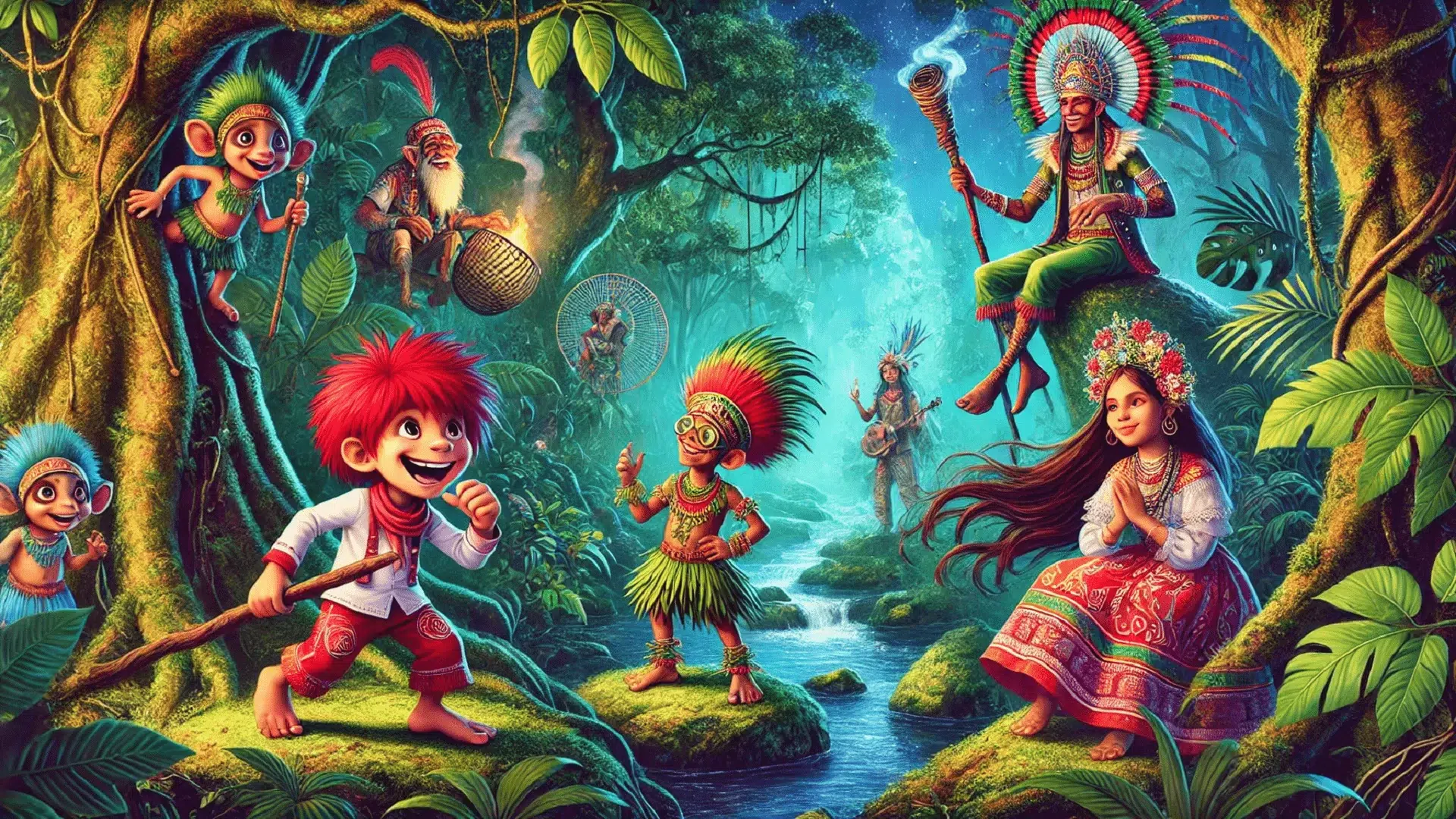
The mythologies of indigenous cultures of the Americas are equally rich and diverse, reflecting a deep connection with nature and ancestors.
Mayan mythology includes a wide range of gods and supernatural beings. The Popol Vuh, the “book of the Council”, is one of the most important sources on the Mayan legends, narrating the creation of the world and the story of the twin heroes Hunahpu and Ixbalanque.
Modern Mythologies: The Renaissance of Myths#
While ancient mythologies are often seen as relics of the past, they continue to influence modern culture in surprising ways. Movies, television series, books, and video games often incorporate elements of these stories, reimagining them for new audiences.
Marvel's cinematic universe, for example, brought Norse gods like Thor and Loki to the big screen, introducing them to millions of people around the world. Similarly, Rick Riordan's “percy Jackson” series has reintroduced Greek mythology to a new generation of readers, blending modern adventures with ancient legends.
Conclusion#
In short, the exploration of mythologies around the world offers us a deep look at the cultures and civilizations that have shaped the history of humanity. Through these legends, it is possible to better understand the values, fears and aspirations of our ancestors. In addition, mythologies serve as a mirror, reflecting the universal dilemmas and issues that still resonate in contemporary society. It is fascinating to realize how stories of gods, heroes and mythical creatures, told thousands of years ago, continue to inspire and influence literature, cinema and even modern philosophy.
Continue reading
You might like it too
Myths: legends, gods and fascinating mysteries
Immerse yourself in the fascinating universe of mythologies and discover a world filled with legends, gods and mysteries that have enchanted and inspired generations.
Mythologies: legends, gods and mysteries
To explore the mythologies of the world is to enter a universe full of legends, gods and mysteries that have fascinated humanity since time.